A scar is a mark left on the skin after sustaining a wound or injury, or following a surgical procedure.
You cannot get rid of scars once formed but they will generally fade over time. Scars can take a couple of years or more to finally settle. There are things you can do to help improve the appearance of scars such as massaging a moisturising cream into the wound once a day for a few minutes, and protecting it from the sun.
Scars can vary in colour, the fresher the scar generally the more pink or red it is. Over time the scar’s colour will change and fade to purple, brown, white or skin-coloured – everyone is different and thus the outcome of the scar will be difficult to predict.
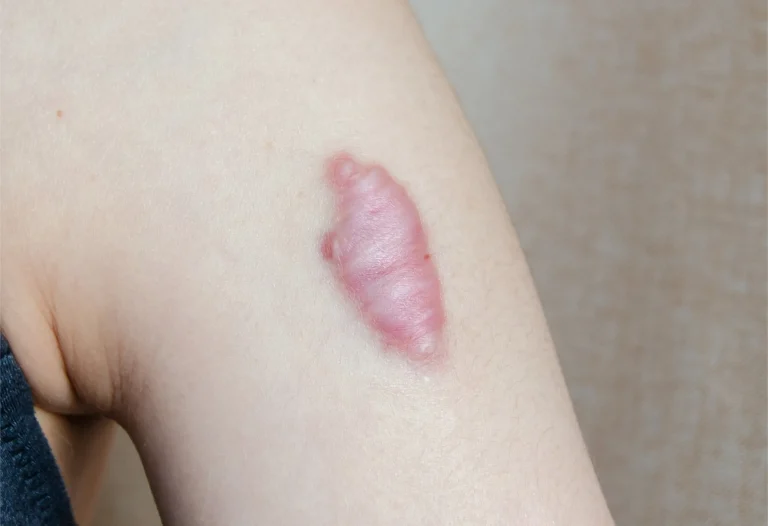
Most people after surgery will be left with a fine line scar that is often slightly raised at the beginning but will generally flatten over time. Some scars can be indented such as those left after acne or chicken pox. Others may end up remaining thick, if the thickness of the scar does not grow bigger than the original wound, this is called a hypertrophic scar. However in some individuals who are inclined to thick scars, the scar can grow beyond the original wound and this is called a keloid scar – these do not usually fade or flatten over time.
Most scars will not cause any symptoms. While scars are healing however, it is possible that they can feel itchy, sensitive, painful or uncomfortable. Keloid scars may sometimes feel like they are tightening the skin around the wound.
Keloid scars are thick, rounded scar tissue that grow beyond the borders of the original wound. They are often pink/red or darker in colour compared to the surrounding skin colour. The most common locations for keloid scars are the chest, back/shoulders and ear lobes. Darker skin types, people under 30, and people with a known history of keloid scars are more susceptible to developing them. Keloid scars can sometimes take as long as a year or more to materialise.
You cannot get rid of keloid scars however there are some treatments that may improve their appearance. Common treatment options include:
If you think you have a keloid scar we are able to offer steroid injections and freezing treatment (cryotherapy). Equally we are happy to provide advice on your scars to help you decide on what treatment may be best for you.
If you have a scar and would like us to have a look, please contact us using one of the options detailed below.
If it is deemed that a closer look is necessary, we can arrange an initial consult.
After discussing your options, should a procedure be the recommended course, this can be arranged
Slick and professional service. Very friendly and really gave me the results i was looking for. Would highly recommend
Took the time to inform me of the best treatment for what I wanted to achieve. Very friendly and welcoming. Will definitely go back
Please ensure you have read our Terms and Conditions.
Go to Terms & Conditions
"*" indicates required fields