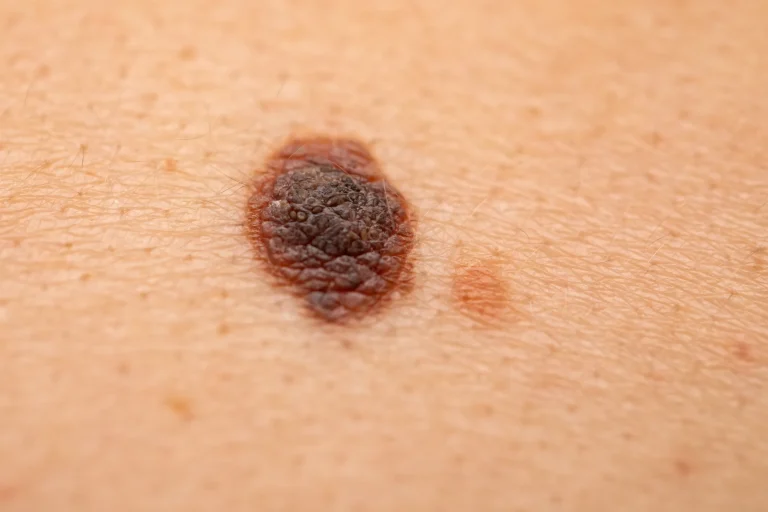
Moles, also known as naevi, are a common type of skin growth. They often appear as small, dark brown spots that are caused by clusters of pigment-forming cells called melanocytes. Some people develop moles at birth or in the first two years of life. This type of mole is called a congenital melanocytic naevus. However, most people develop moles during their childhood or early adult life and these are known as acquired melanocytic naevi.
How these moles look may change over time and by the age of 30-40 the number of moles present on the body will peak. Thereafter, the number of moles on your body actually decreases as some moles will fade over time. Thus it is important to be aware that if new moles appear after the age of 40 you should keep a close eye on them and get them checked out if you are worried about how they look.
Being aware of changes in your moles and other pigmented (coloured) patches is important when assessing for skin cancer, especially malignant melanoma. Melanomas can affect anyone regardless of skin type and at any age, although it is extremely rare in childhood.

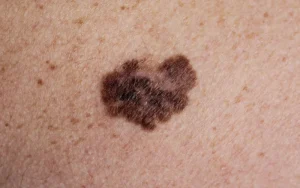
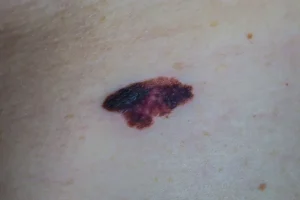
The typical mole is a small brown spot. But moles come in different colours, shapes and sizes:
Moles can grow anywhere on your body, including your scalp and armpits, as well as under your nails and between your fingers and toes. If an existing mole or a new mole changes shape, has multiple shades of colour or grows larger than 6mm it is advised to get the mole checked over.
Some other symptoms of moles include pain, bleeding, oozing, crusting and itching. These symptoms can occur in normal moles as well as suspicious moles. If you are concerned by these symptoms it is advised to get the mole looked at.
When you get in touch with us we will request an image of your mole. It may be obvious to us that the mole is suitable for our minor surgery service. However, if the mole is felt to need a closer look, you will be offered a consultation with Dr McFadden who will look at the mole under a microscope called a dermatoscope. If the mole is irregular or suspicious we will advise you to seek prompt NHS assessment and treatment.
The moles we remove at BCM Skin Care are harmless (benign) and are often removed for cosmetic reasons or because they cause symptoms such as catching on clothes, itching or discomfort. During your consultation we will discuss the recommended method of mole removal with you.
If you have a mole and would like us to have a look, please contact us using one of the options detailed below.